Dyeing and printing houses
Polish colour and COD before discharge or reuse.
- Cotton and blends
- Synthetics
- Denim washing
RESEARCH PARTNERSHIP / 06
Rispri Labs delivers advanced treatment for textile and dye effluent, developed with ICT Mumbai: a reusable graphene catalyst that breaks down dye molecules in minutes and selective polymer adsorbents that capture what remains.
ICT Mumbai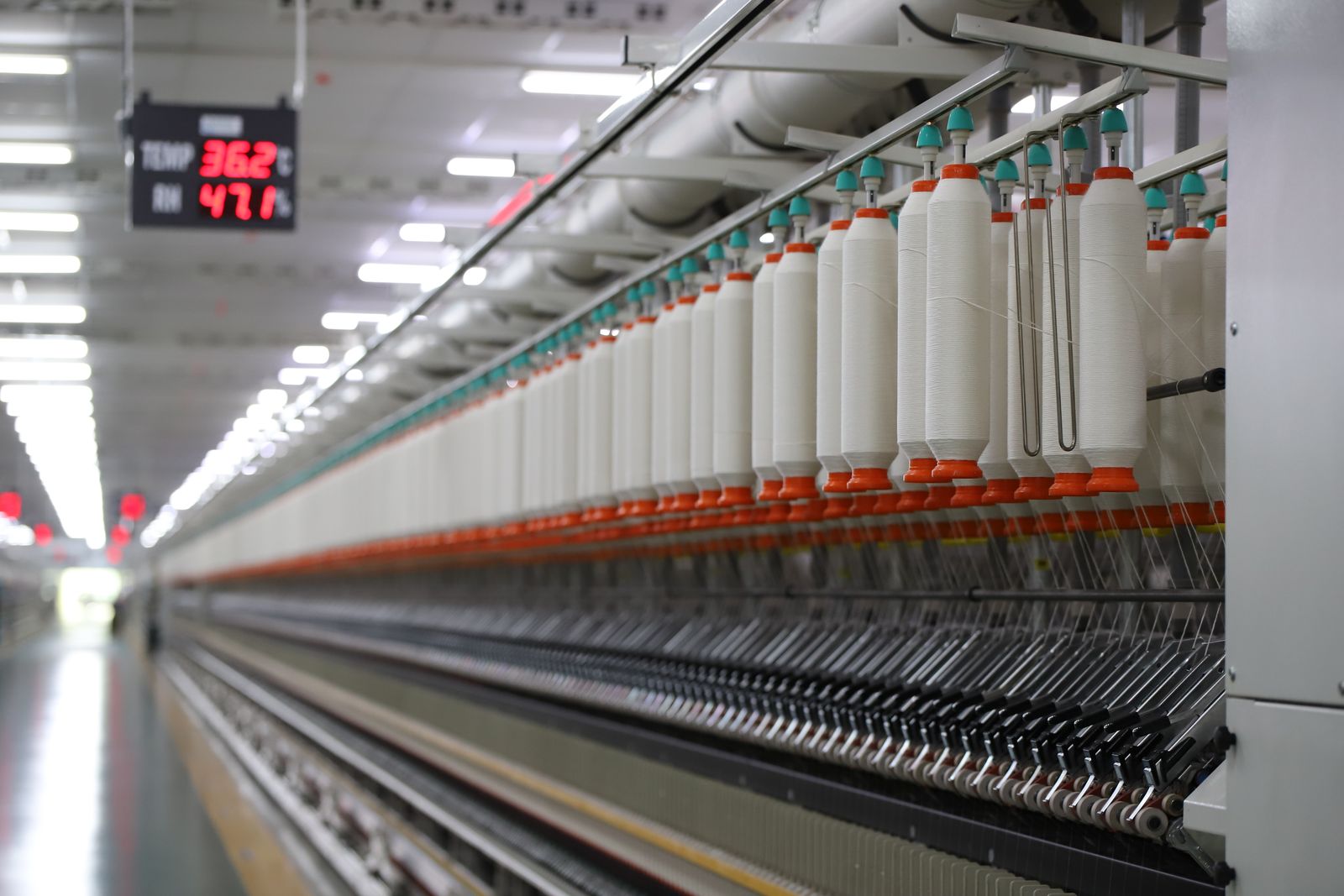
What it means for you
to cut COD in dye effluent by over 80%.
the same catalyst is reused after a simple wash.
of dye captured by the polymer polish in about an hour.
Performance
Reactive and acid dyes resist biological treatment, leaving COD and colour above discharge limits. Catalytic oxidation and selective adsorption attack the dye molecule directly.
Figures are from the research team's controlled trials. Performance on your stream is confirmed in our laboratory before design.
Challenge and response
Dyes pass through biological treatment, leaving colour in the outlet.
A graphene catalyst oxidises the dye molecule itself.
COD stays above discharge limits after secondary treatment.
Catalytic polishing cuts COD by over 80% in 30 minutes.
Activated carbon and chemicals are used once and thrown away.
Catalyst and adsorbent are regenerated and reused.
Dye residues foul RO membranes in ZLD plants.
Remove colour before the RO stage to protect membranes.
How it works
Graphene-oxide catalyst is added to secondary-treated effluent.
Dye molecules break down within minutes, cutting COD and colour.
A porous organic polymer adsorbs remaining dye selectively.
Catalyst is regenerated with peroxide; adsorbent is cycled for reuse.
Use cases
Polish colour and COD before discharge or reuse.
Treat concentrated dye-laden streams.
Add a tertiary stage for textile clusters.
Remove colour before membranes.
Return clear water to the process.
Handle changing dye mixes between batches.
Comparison
| Factor | Conventional tertiary treatment | Rispri solution |
|---|---|---|
| Colour removal | Coagulants and carbon, often partial | Dye molecule broken down catalytically |
| Speed | Long contact times | Over 80% COD cut in 30 minutes |
| Reuse | Single-use carbon and chemicals | Catalyst reused 10 times; adsorbent cycled |
| Sludge | Chemical sludge from coagulation | Little added sludge |
| Dye range | Varies by chemistry | Methylene blue, brilliant green, Acid Orange II and mixtures |
Standards and regulations
We design each system to meet your consent conditions and the regulations for your sector, and our laboratory reports against them.
Industries served
Why Rispri
Built on patented and peer-reviewed research from our partnership with ICT Mumbai.
Our accredited laboratory characterises your water or waste before design and verifies results after.
The team that builds ETPs, STPs and ZLD plants across India takes each solution from pilot to full scale.
Design, supply, installation, commissioning, operation and testing under one contract.
Questions
Trials covered methylene blue, brilliant green, Acid Orange II and dye mixtures. We test your own effluent in our laboratory before design.
The graphene catalyst cut COD by up to 82.56% in 30 minutes, and the polymer adsorbent removed about 95% of dye in 70 minutes.
Yes. It was reused 10 times after simple peroxide regeneration.
As a tertiary polishing stage after biological treatment, or ahead of RO in a ZLD plant to protect the membranes.
It has been validated in controlled trials. We take it to your site through a pilot on your own effluent.
Research partnerships
THE NEXT STEP
Send us a sample or tell us about your site. We will test it, recommend a configuration and set up a pilot.
Request a pilot