
Campuses and townships
Treat sewage on site and reuse the water for gardens.
- Universities and schools
- Residential townships
- Industrial colonies
RESEARCH PARTNERSHIP / 13
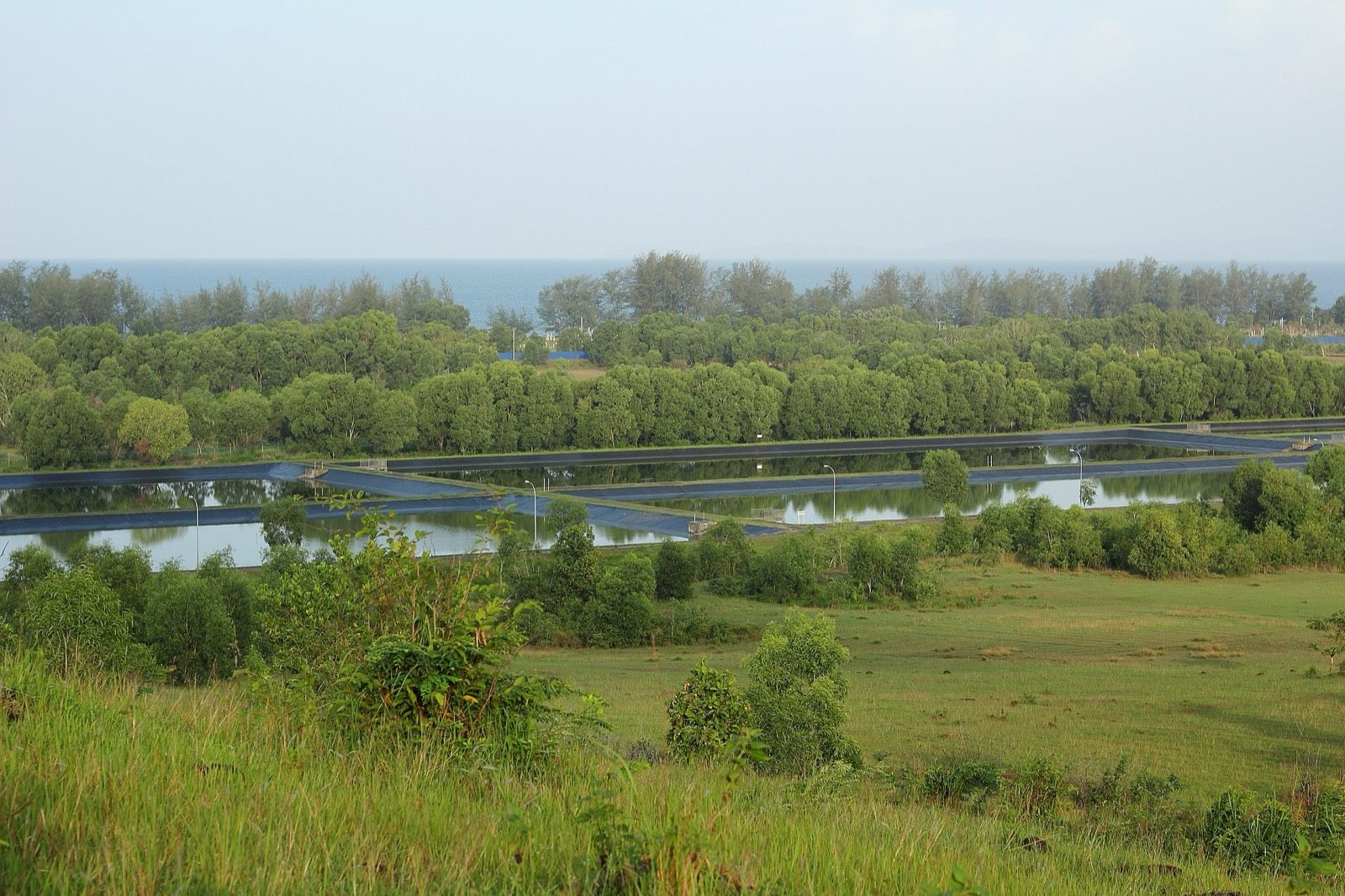
Rispri Labs delivers BIO-STP, a nature-based sewage treatment plant that uses a settling chamber, an engineered wetland and an aquatic plant biofilter instead of blowers for most of the treatment. Low energy, built for monsoon surges, and designed to catch microplastics and endocrine disruptors that conventional STPs miss.
What it means for you
Gravity flow and plants replace blowers for most of the treatment.
The settling chamber buffers surges, including stormwater.
Plants and microalgae can become biofertiliser.
Performance
Field studies of how a river recovers after it passes a city shaped the design. They found 2.6 times more microplastics in urban wetlands than in the river itself, and that human activity explained 82.4% of the variation in water quality. BIO-STP uses the same processes a healthy wetland uses, engineered and sized for your sewage.
The microplastic and water-quality figures are from field studies of a river downstream of a city. Treated water quality on your plant is verified by our NABL-accredited laboratory.
Challenge and response
Conventional STPs run blowers around the clock, and the power bill decides whether they keep running.
Gravity flow, plants and microbes do most of the treatment, with far less blower use.
Monsoon stormwater floods small STPs and washes sludge out.
A serpentine settling chamber buffers surges, with equalisation and overflow control.
Microplastics and endocrine disruptors pass through most STPs.
Adsorbent media, plants and microbes in the wetland are chosen to target them.
Untreated drains feed ponds and lakes and undo restoration work.
A modular BIO-STP treats the drain before it reaches the water body.
How it works
Sewage flows by gravity through three stages.
Removes grit and solids and buffers surges, including monsoon stormwater.
Chambers with adsorbent media, plants and microbes remove nutrients, metals, microplastics and endocrine disruptors.
Microalgae and plants polish the water; the biomass can become biofertiliser.
Use cases
Treat sewage on site and reuse the water for gardens.
A treatment plant that looks like a garden, not a machine room.
Treat sewage close to where it is made, without long sewer lines.
Stop sewage before it reaches a pond or lake.
Use the treated water where the rules allow.
Inlet and outlet are tested so the plant is shown to meet its consent.
Comparison
| Factor | Conventional STP | Rispri solution |
|---|---|---|
| Treatment driver | Blowers and mechanical aeration | Plants and microbes, with gravity flow |
| Energy | Continuous blower power | Low; blowers replaced for most treatment |
| Microplastics and endocrine disruptors | Not targeted | Targeted by wetland media, plants and microbes |
| Monsoon surges | Often washed out | Equalisation and overflow control |
| Layout | Fixed plant | Modular stages added as flow grows |
| By-products | Sludge for disposal | Biomass that can become biofertiliser |
Standards and regulations
We design each system to meet your consent conditions and the regulations for your sector, and our laboratory reports against them.
Industries served
Why Rispri
A proven, field-tested technology from our research collaborations with IIT Bombay, IIT Kharagpur and ICT Mumbai.
Our accredited laboratory characterises your water or waste before design and verifies results after.
The team that builds ETPs, STPs and ZLD plants across India takes each solution from pilot to full scale.
Design, supply, installation, commissioning, operation and testing under one contract.
Questions
BIO-STP is a nature-based sewage treatment plant. Sewage passes through a serpentine settling chamber, an engineered wetland and an aquatic plant biofilter, where settling, adsorbent media, plants and microbes clean it.
A conventional STP relies on blowers to aerate the sewage. BIO-STP relies on plants and microbes and gravity flow for most of the treatment, targets microplastics and endocrine disruptors, handles monsoon surges with equalisation and overflow control, is modular and yields biomass.
It is designed to meet the standards in your consent to operate, and our NABL-accredited laboratory tests the treated water to show it does. For conventional mechanical treatment, see our sewage treatment plants.
Much less than a blower-driven STP. Gravity flow and plants replace blowers for most of the treatment, so pumping is the main power use.
The serpentine settling chamber buffers surges, including stormwater, and the plant has equalisation and overflow control so the wetland is not washed out.
The engineered wetland is designed for it. Its adsorbent media, plants and microbes target microplastics, metals, nutrients and endocrine disruptors.
More open area than a compact mechanical STP, because plants do the work. We size it after a site survey, and the stages are modular.
Microalgae and plants from the biofilter are harvested, and the biomass can become biofertiliser.
Yes. BIO-STP is a field-proven, nature-based treatment approach. Each project starts with a survey and a pilot sized for your flow, and our NABL-accredited laboratory verifies the treated water quality.
Research partnerships
THE NEXT STEP
Tell us about your sewage flow and site. We will test the sewage, size the stages and propose a pilot.
Request a pilot