
INDUSTRIES / CERAMICS AND TILES
Ceramic tile industry wastewater
recycled in a closed loop, solids and all.
Ceramic plants make little dissolved pollution but a great deal of slurry: clay, glaze and polishing fines in water. We test it in our NABL-accredited laboratory and design clarifiers, flocculant dosing and filter presses that send clear water back to the line and the solids back to body preparation.
In short
How ceramic and tile wastewater is treated.
Ceramic tile and sanitaryware wastewater comes from body preparation, glaze preparation, glazing lines, mould and equipment washing and, in vitrified tile plants, from polishing and squaring lines. Its main pollutant is suspended solids: clay, silica, feldspar, glaze and polishing fines. It is treated by settling, often with a flocculant to speed it up, in a clarifier or thickener; the settled slurry is dewatered in a filter press; and the clear water and the solids are both recycled into the process. Glaze streams are kept separate because some glazes contain lead, zinc, boron or other metals.
Most ceramic plants are expected to recycle their process water and discharge none.
- 100mg/L
- Suspended solids limit for discharge to inland surface water
- 0.1mg/L
- Lead limit for discharge to inland surface water
- 5.0mg/L
- Zinc limit for discharge to inland surface water
- 5.5–9.0pH
- pH range for discharge to inland surface water
Where it comes from
Where does ceramic plant wastewater come from?
Ceramics are made from clays, feldspar, quartz and other minerals, ground in water, shaped, glazed and fired. Water is used as a carrier for the raw materials and for cleaning, and it picks up fine solids at every stage. Morbi in Gujarat, India's best-known ceramic tile cluster, shows the pattern on a large scale: hundreds of plants, each running ball mills, glaze lines and, for vitrified tiles, polishing lines.
| Process | What happens | What it adds to the wastewater |
|---|---|---|
| Body preparation | Raw materials are wet-ground in ball mills to a slip, then spray-dried to powder for pressing | Washings from mills, slip tanks and spray dryer scrubbers: clay, silica, feldspar |
| Glaze and engobe preparation | Frits, pigments and opacifiers are ground in water to make glaze | Glaze fines with zirconium, zinc, boron, barium and, in some glazes, lead or other metals |
| Glazing and decoration lines | Glaze is sprayed, poured or printed onto tiles; lines are cleaned at changeovers | Glaze overspray and washings, inks, colour |
| Polishing and squaring (vitrified tiles) | Fired tiles are ground flat, polished and edged with abrasive heads under a constant flow of water | The largest volume: very fine tile and abrasive particles in a grey slurry |
| Sanitaryware casting | Slip is cast in plaster or pressure moulds; moulds and benches are washed | Slip, plaster particles, glaze from spraying booths |
| Floor and equipment washing | General cleaning of the press, glaze and kiln areas | Mixed solids, some oil and grease from presses |
| Utilities and domestic | Cooling, softener and RO, canteen and toilets | Blowdown, regeneration waste and sewage, treated separately |
Typical effluent characteristics
| Parameter | Typical range | Why it matters |
|---|---|---|
| Suspended solids | Several thousand to over 50,000 mg/L | The main pollutant; fine particles settle slowly without a flocculant |
| Turbidity | Very high, milky grey or coloured | Recycled water must be clear enough not to mark tiles or block nozzles |
| pH | 6.5 to 9 | Affects flocculant choice; some glazes and cleaning agents push it up |
| COD | Low to moderate, mostly from binders, deflocculants and glaze additives | Rarely the limiting factor; biology is seldom needed for process water |
| TDS | Low at first, rises as water is recycled | Dissolved salts can change slip viscosity and glaze behaviour |
| Lead | Present only where lead-bearing frits or glazes are used | Strict outlet limit; makes glaze sludge hazardous |
| Zinc, boron, barium, zirconium | Present in many glaze streams | Mostly in particulate form; removed with the solids if settled well |
| Oil and grease | Traces from presses and machinery | Can form a film on recycled water |
The useful fact about ceramic wastewater is that almost everything in it came from the raw materials. Body slurry can go back into body preparation and clear water back to the mills and lines. The aim is not to "treat and discharge" but to close the loop, while keeping glaze solids, which may carry metals, away from the body if they would change its colour or properties.
Standards and rules
Which standards apply to ceramic plant wastewater?
There is no separate CPCB effluent standard for ceramic tiles that most units are measured against; the general standards in Schedule VI of the Environment (Protection) Rules, 1986 apply, together with the conditions of your consent to operate. In practice, most boards expect ceramic plants to recycle all process water and discharge nothing, and to treat domestic sewage separately. The general limits most relevant to ceramics are below.
| Parameter | General standard |
|---|---|
| pH | 5.5 to 9.0 |
| Total suspended solids | 100 |
| Oil and grease | 10 |
| COD | 250 |
| Lead | 0.1 |
| Zinc | 5.0 |
| Total chromium | 2.0 |
| Copper | 3.0 |
Treatment scheme
Slurry water recycling, stage by stage.
This is the scheme we start from for a tile or sanitaryware plant. Body, glaze and polishing streams are collected separately where their solids are going to different places.
| Stage | What happens | Typical units |
|---|---|---|
| 1. Segregate streams | Body preparation washings, glaze line washings and polishing slurry are collected in separate drains. | Separate drains and sumps; covered channels |
| 2. Screen and remove grit | Chips, broken tile pieces and coarse grit are removed so they do not wear pumps. | Bar screen, grit trap, vibrating screen |
| 3. Dose flocculant | A coagulant and a polyelectrolyte bind the fine particles into large flocs that settle in minutes rather than days. | Polymer preparation and dosing system, flash mixer or in-line mixer |
| 4. Settle and thicken | Flocs settle; clear water overflows and thick slurry collects at the bottom. | Clarifier, lamella or tube settler, thickener; multi-chamber settling tanks in small plants |
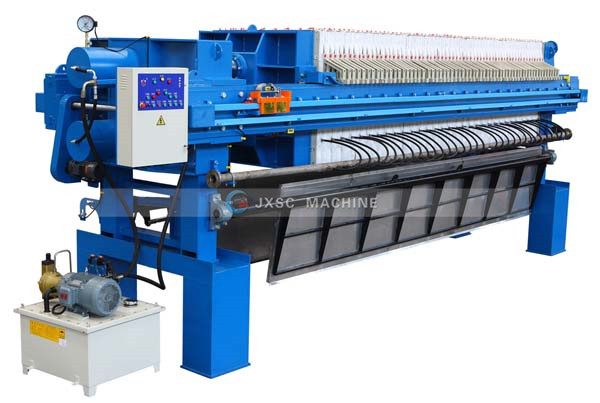
| 5. Dewater | Thickened slurry is pressed into cake with a low water content. | Filter press, sometimes a decanter centrifuge |
| 6. Filter and store clear water | Overflow is filtered to remove residual fines and stored for reuse. | Pressure sand filter or multimedia filter, clear water tank |
| 7. Polish where needed | For glaze streams with lead or other metals, or water returning to sensitive uses, a further step removes dissolved metals and salts. | pH adjustment and metal precipitation, activated carbon, softener or RO |
Options compared
| Option | Best for | Watch-outs |
|---|---|---|
| Settling pits without chemicals | Very small units with coarse solids | Large land area; fine polishing slurry hardly settles; overflow risk in monsoon |
| Clarifier with flocculant | Most tile plants; continuous flow | Polymer dose must suit the slurry and water hardness |
| Lamella or tube settler | Limited space; upgrading an overloaded pit | Plates need periodic cleaning |
| Filter press | Dry cake for reuse in body or disposal | Cloth washing and cycle time; size for peak slurry |
| Decanter centrifuge | Continuous dewatering in large plants | Wear from abrasive solids; higher power |
| RO on recycled water | Controlling TDS build-up in closed loops | Needs very good pre-filtration; reject must be managed |
Our NABL-accredited laboratory tests suspended solids, turbidity, pH, TDS and metals such as lead and zinc, and runs settling and jar tests to pick the polymer and dose.
Recycling and recovery
Closing the loop on water and solids.
Clear water back to the process
Clarified and filtered water can go back to ball mills, glaze preparation, line washing and, after fine filtration, to polishing machines. Ball mills accept the most solids and dissolved salts, so they are the natural first destination for recycled water.
Body slurry back to body preparation
Solids from body preparation are the same clay and minerals that went in. Thickened slurry or filter cake from these streams can be added back to the ball mills in a controlled proportion. Glaze solids can change the colour and firing of the body, so they are usually kept separate.
Polishing sludge
The fine sludge from vitrified tile polishing is the largest solid stream in many plants. Some plants reuse part of it in the body; other uses, such as in construction products, depend on its composition and on local rules. It should never be dumped on open land, where it blows as dust and silts drains.
Watching TDS and hardness
In a fully closed loop, dissolved salts slowly rise. This can change slip viscosity and cause glaze defects. Regular testing, a small bleed treated by softening or RO, and the right deflocculant dose keep the loop stable. Our water treatment chemicals include flocculants and RO and softener chemicals.
Cost
How much does a ceramic slurry recycling plant cost?
For ceramic plants, the cost depends on the volume of slurry water, how fine the solids are (polishing slurry is the hardest), whether glaze streams need metal removal, and how dry the cake must be. Use these ranges to budget.
| Plant | Typical scope | Indicative cost* |
|---|---|---|
| Glaze line recycling, 10 to 30 KLD | Settling tank or lamella, polymer dosing, small filter press | ₹10 to 30 lakh |
| Tile plant recycling, 100 to 300 KLD | Screens, flocculant dosing, clarifier, filter press, sand filter | ₹50 lakh to ₹1.5 crore |
| Polishing line recycling, 500 KLD or more | Large clarifier or thickener, filter presses, clear water storage | ₹1.2 to 3 crore |
| TDS control bleed, per 25 KLD | Softener or RO on a side-stream of recycled water | ₹10 to 30 lakh |
*Indicative 2026 ranges for equipment, electricals and installation, excluding land, civil works and taxes. Solids load, particle fineness and the number of separate streams change the figure a lot, so we price only after testing. Running costs are mostly polymer, power and filter press labour, typically ₹10 to 30 per m³ recycled.
What drives capital cost
- Slurry volume and solids content
- Polishing line or glaze-only
- Number of separate streams
- Filter press size and automation
- Metal removal or TDS control
What drives running cost
- Polymer and coagulant
- Filter press labour and cloths
- Pumping of abrasive slurry
- Sludge handling and transport
- Pump and valve wear
Where ceramic plants save
- Less fresh water drawn or bought
- Body solids reused as raw material
- No tanker or land costs for slurry
- Fewer consent violations
- Steadier slip and glaze quality
We test your slurry, run settling trials and design a compact clarifier and filter press that fit the space you have.
Troubleshooting
Common ceramic plant water problems, and how we fix them.
- 01The problem
Polishing slurry does not settle and the recycled water stays grey.
What we doSettling tests to select the coagulant and polymer, correct mixing and dosing points, and a clarifier or lamella sized for the fine particles.
- 02The problem
Settling pits fill up fast and need constant manual cleaning.
What we doReplace pits with a thickener and filter press so solids leave as cake every shift.
- 03The problem
Recycled water causes glaze defects or slip viscosity problems.
What we doTest TDS, hardness and residual polymer, keep glaze and body loops apart, and add a softening or RO bleed where salts build up.
- 04The problem
Pumps, valves and pipes wear out within months.
What we doRemove grit early, use slurry-duty pumps and lined pipes, and keep velocities in the right range.
- 05The problem
The filter press takes too long or the cake is too wet.
What we doThicken the slurry first, condition it with the right polymer, and check cloth type, feed pressure and cycle time.
- 06The problem
Lead or zinc is found in the water or sludge during an inspection.
What we doTrace the glaze source, segregate glaze washings, precipitate metals at the right pH and classify the sludge by testing.
What we offer
What Rispri does for ceramic plants.
Water and slurry testing
Suspended solids, TDS, hardness and metals such as lead and zinc, plus settling tests, in our NABL-accredited lab.
Testing services →Slurry recycling plants
Flocculant dosing, clarifiers, lamellas, filter presses and clear water filters, designed and built.
Effluent treatment plants →Flocculants and water chemicals
Coagulants and polymers for slurry, plus softener and RO chemicals for the loop.
Water treatment chemicals →Metal removal
Removal of lead, zinc and other metals from glaze streams.
Heavy metal recovery →Sludge testing
Composition and leachable metals to decide between reuse and hazardous waste disposal.
Sludge testing →Groundwater telemetry
Flow meters and CGWA-compliant telemetry for borewell abstraction.
Smart water management →Buying guide
What to ask before you buy a ceramic recycling plant.
Use these questions with any supplier, including us.
- Was the design based on settling tests with my slurry? Polishing fines and body slurry behave very differently.
- Which streams are kept separate, and where do their solids go? Body, glaze and polishing.
- What clarity will the recycled water have? Turbidity and suspended solids, in writing.
- How dry is the filter cake, and how many cycles per day? This decides labour and handling.
- How will TDS build-up be managed? Testing plan and bleed treatment.
- Are pumps and pipes rated for abrasive slurry? Ask for materials and expected wear life.
- What does it cost to run per m³? Polymer, power and labour.
- Who supports it after commissioning? Chemicals, spares, O&M and periodic NABL test reports.
Why Rispri
Settling tests, plant and polymer from one team.
Our own NABL lab
We test your slurry and run settling trials before design, and check recycled water quality after start-up.
Engineering since 1999
1,498+ plants and turnkey projects for 499+ clients across industry, hotels, hospitals and cities.
Close to Gujarat's clusters
An office in Ahmedabad, alongside Jaipur and Agra, for site visits, chemicals and service.
Research partnerships
Metal recovery and water recovery technologies, delivered in collaboration with IIT Bombay, IIT Kharagpur and ICT Mumbai.
Questions
Ceramic industry wastewater FAQs.
What is in ceramic tile industry wastewater?
Mostly suspended solids: clay, silica, feldspar, glaze and, in vitrified tile plants, very fine polishing particles. Glaze streams may also carry zinc, boron, barium, zirconium and, where lead-bearing glazes are used, lead. Dissolved organic pollution is usually low.
How is slurry water recycled in a ceramic plant?
The slurry is screened, dosed with a coagulant and polymer, and settled in a clarifier or thickener. Clear water overflows to a filter and storage tank for reuse, and the thickened slurry is pressed in a filter press. Body solids can go back to the ball mills.
How is glaze effluent treated?
Glaze washings are collected separately, settled with a flocculant and filtered, and the clear water is reused on the glaze line. Where lead or other toxic metals are present, the pH is adjusted to precipitate them and the sludge is tested to see whether it is hazardous waste.
Why does polishing slurry not settle?
Polishing produces extremely fine particles that stay suspended for a long time. They need a coagulant and a polymer, chosen by settling tests, to form flocs heavy enough to settle in a clarifier or lamella settler.
Can ceramic sludge be reused?
Body slurry and filter cake can usually be added back to body preparation in a controlled proportion. Polishing sludge is sometimes reused in the body or other products, depending on its composition. Glaze sludge with metals must be tested before any reuse.
Do ceramic plants need an ETP?
They need a treatment and recycling system for process water, and most consents require that process water is recycled with no discharge. Domestic sewage is treated separately in an STP or septic system as the consent requires.
Which standards apply to ceramic plant wastewater?
The general standards under the Environment (Protection) Rules, 1986 apply, such as suspended solids 100 mg/L, lead 0.1 mg/L and zinc 5.0 mg/L for discharge to inland surface water, but most boards require zero discharge of process water. Check your consent.
Why is Morbi important for the ceramic industry?
Morbi in Gujarat is India's best-known ceramic tile cluster, with a very large number of tile and sanitaryware plants in one area. Its scale makes water recycling, slurry handling and dust control important shared issues for the cluster.
How much does a ceramic recycling plant cost?
As an indication, a 10 to 30 KLD glaze line system costs about ₹10 to 30 lakh, and a 100 to 300 KLD tile plant system about ₹50 lakh to ₹1.5 crore, excluding civil work and land. We price after testing your slurry.
What happens to TDS when water is recycled again and again?
Dissolved salts slowly build up, which can affect slip viscosity and glaze quality. Testing at regular intervals, a small softened or RO-treated bleed and correct deflocculant dosing keep it under control.
Is a filter press better than settling pits?
For most plants, yes. Settling pits need large land, overflow in the monsoon and must be emptied by hand. A clarifier with a filter press produces clear water continuously and solid cake that is easy to reuse or dispose of.
Related