INDUSTRIES / OIL, GAS AND REFINERIES
Refinery effluent treatment
from oily water to reusable water.
Refinery and petrochemical wastewater carries free and emulsified oil, sulphides, phenols, ammonia and hydrocarbons, and the load changes with every crude and every tank drain. We test it in our NABL-accredited laboratory, then design or upgrade the oil separators, DAF, biology and recycle plant so that it meets the refinery standards and can go back into the cooling towers.
In short
How refinery and petrochemical wastewater is treated.
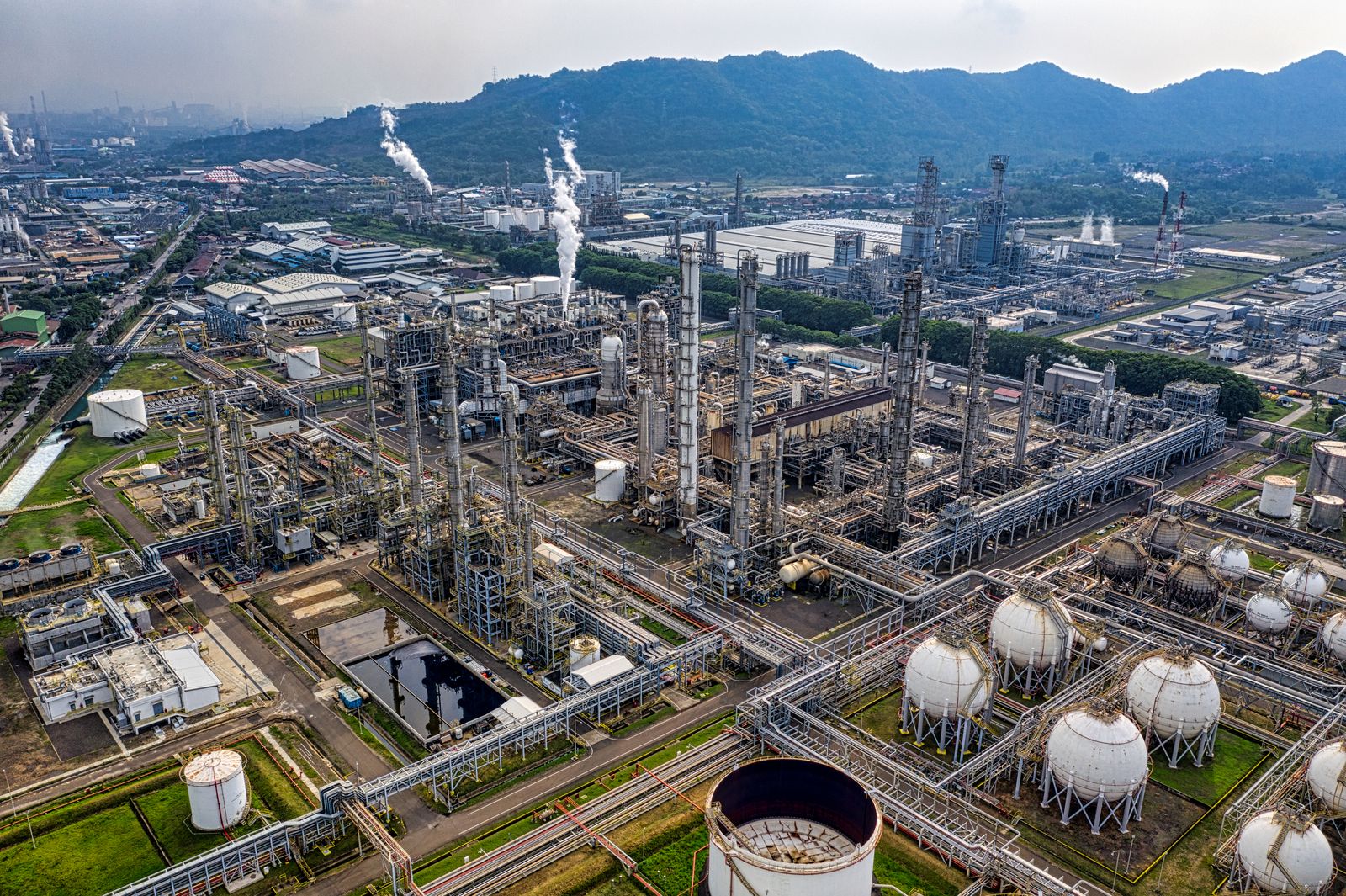
A refinery effluent treatment plant removes oil, sulphides, phenols, ammonia and organic load from desalter water, tank drains, process condensates, cooling tower blowdown and oily stormwater. Strong streams are pre-treated at source: sour water is steam-stripped of hydrogen sulphide and ammonia, and spent caustic is oxidised or neutralised. The combined effluent then passes through oil separators (API, TPI or CPI), equalisation, dissolved or induced air flotation for emulsified oil, biological treatment (activated sludge, MBBR or MBR) and tertiary filtration, often followed by RO for reuse. Under CPCB's petroleum oil refinery standards, treated effluent must meet limits such as oil and grease 5 mg/L, BOD 15 mg/L and phenols 0.35 mg/L.
- 5mg/L
- Oil and grease limit in CPCB's standards for petroleum oil refineries
- 0.35mg/L
- Phenol limit for treated refinery effluent
- 0.4m³/t
- Wastewater discharge allowed per tonne of crude processed
- 150µm
- Smallest free oil droplet an API separator is designed to remove
Where it comes from
Where does refinery and petrochemical wastewater come from?
A refinery produces a few large, fairly dilute streams and several small, very strong ones. The small strong streams cause most ETP upsets, so they are segregated and pre-treated before they join the main oily water sewer.
| Source | What it is | What it adds |
|---|---|---|
| Desalter effluent | Wash water used to remove salt from crude before distillation | Salts, emulsified oil, solids, benzene and other aromatics; warm; often the largest process stream |
| Sour water | Condensed steam and water from distillation, cracking and hydrotreating units | Hydrogen sulphide, ammonia, phenols, cyanides; very strong odour |
| Spent caustic | Caustic soda used to wash fuels and remove sulphur compounds and acids | Very high pH, sulphides, mercaptans, phenols and naphthenic acids; extremely high COD |
| Crude and product tank drains | Water settled out at the bottom of storage tanks and drained off | Free and emulsified oil, salts, sludge; arrives in slugs |
| Cooling tower and boiler blowdown | Bleed from utility systems | Dissolved salts, inhibitors, biocide; oil if exchangers leak |
| Oily stormwater and washings | Rain and wash water from process areas, pumps and loading bays | Oil, grit, suspended solids; very large volumes during monsoon |
| Petrochemical process water | Reaction water, washings and quench water from cracker and polymer plants | Aromatics, glycols, organic acids, catalysts, polymer fines |
| Produced water (upstream) | Water brought up with oil and gas from the reservoir | Oil, very high salinity, dissolved gases, sometimes heavy metals and naturally occurring radioactivity |
| Sanitary sewage | Township, offices and canteens | BOD, nutrients and bacteria |
Typical refinery effluent characteristics
| Parameter | Typical range at ETP inlet | Why it matters |
|---|---|---|
| Oil and grease | Hundreds to a few thousand mg/L, higher during tank draining | Free oil overloads separators; emulsified oil passes them and coats the biology |
| COD | 500 to 2,000 mg/L | Sets the size of the biological stage |
| BOD | 150 to 600 mg/L | Much of the organic load is biodegradable once oil is removed |
| Phenols | 5 to 50 mg/L; far higher in spent caustic | Toxic to fish and to unacclimatised bacteria; tight 0.35 mg/L limit |
| Sulphides | 5 to 50 mg/L; much higher if sour water bypasses the stripper | Odour, H₂S risk to workers, oxygen demand in aeration |
| Ammonia nitrogen | 20 to 100 mg/L | Needs nitrification to meet 15 mg/L |
| Total dissolved solids | 1,000 to 4,000 mg/L | Decides whether RO is needed for reuse |
| Benzene and aromatics | Traces to several mg/L | Volatile and toxic; benzene limit of 0.1 mg/L |
| pH | 7 to 10, with spikes from spent caustic | Caustic slugs upset the biology |
Standards and rules
What are the CPCB standards for refinery effluent?
The Environment (Protection) Rules, 1986 contain industry-specific standards for petroleum oil refineries, revised by MoEF&CC in 2008. They are among the strictest effluent standards in India. The main values are below; your consent may be tighter.
| Parameter | Petroleum oil refinery standard |
|---|---|
| pH | 6.0 to 8.5 |
| Oil and grease | 5.0 |
| BOD (3 days at 27 °C) | 15 |
| COD | 125 |
| Suspended solids | 20 |
| Phenols | 0.35 |
| Sulphides | 0.5 |
| Cyanide | 0.2 |
| Ammonia as N | 15 |
| Total Kjeldahl nitrogen | 40 |
| Phosphorus | 3.0 |
| Benzene | 0.1 |
| Wastewater quantum | 0.4 m³ per tonne of crude processed |
Treatment scheme
A refinery ETP, stage by stage.
The scheme is built in the same order everywhere: deal with strong streams at source, remove oil in two or three steps, then treat biologically and polish for reuse.
| Stage | What happens | Typical units |
|---|---|---|
| 0. Source pre-treatment | Sour water is steam-stripped to remove H₂S (to the sulphur recovery unit) and ammonia; stripped water is reused as desalter wash water. Spent caustic is oxidised and neutralised under control. | Sour water stripper; wet air oxidation or controlled neutralisation of spent caustic |
| 1. Free oil removal | Oil droplets rise and are skimmed; heavy solids settle to the bottom. | API separator, tilted plate (TPI) or corrugated plate (CPI) interceptor, skimmers, slop oil tank |
| 2. Equalisation | Flow and strength are evened out over a day so tank drains and caustic slugs do not reach the biology at once. Covered tanks control odour and benzene emissions. | Equalisation tanks with mixing and oil skimming; separate stormwater tank |
| 3. Emulsified oil removal | Chemicals break emulsions; fine air bubbles carry oil and solids to the surface. | Dissolved air flotation (DAF) or induced air flotation (IAF), demulsifier and polymer dosing |
| 4. Biological treatment | Acclimatised bacteria break down phenols, sulphides and organics and convert ammonia to nitrate. | Activated sludge (often two stages), MBBR or MBR, with nitrification |
| 5. Tertiary polishing | Remaining solids, oil, COD and colour are removed to meet the outlet limits. | Clarifier, pressure sand filter, activated carbon, ozone where needed |
| 6. Recycle plant | Treated effluent is cleaned to cooling tower or boiler make-up quality. | UF and RO; reject to evaporation where zero discharge applies |
| 7. Sludge handling | Oil is recovered from oily sludge; the rest is dewatered and sent for authorised disposal. | Sludge thickener, three-phase decanter, filter press |
Oil removal and biology options compared
| Option | Best for | Watch-outs |
|---|---|---|
| API separator | Large flows with heavy free oil and solids; the first step in most refineries | Large footprint; does not remove droplets below about 150 µm or emulsions |
| TPI or CPI interceptor | Smaller droplets in a compact unit; terminals, depots and upstream sites | Plates clog with heavy sludge and wax without regular cleaning |
| DAF or IAF | Emulsified oil and fine solids after the separator | Chemical dose must follow the crude and tank draining; float is oily sludge |
| Activated sludge | Proven, robust treatment of phenols, sulphides and ammonia | Needs space and stable feed; sludge bulking with oil carry-over |
| MBBR | Upgrading existing tanks; more biomass in the same volume | Media screens can foul with oil if DAF is poor |
| MBR | Very clear effluent ready for RO and reuse | Membranes are sensitive to oil; higher power and cleaning cost |
| Oil-selective membranes and absorbents | Polishing oily water at depots, workshops and small sites | Trialled on your oily water first |
Our NABL-accredited laboratory tests oil and grease, COD, BOD, phenols, sulphides, ammonia, TKN, cyanide, metals and TDS on composite samples, and jar tests set demulsifier and polymer doses for your DAF.
Reuse and recovery
Recovering water, oil and sulphur from refinery effluent.
A refinery is a large water user, mostly for cooling towers, boilers and process steam. Treated effluent is a dependable second source, and several things in the wastewater are worth recovering.
Water
After biology and filtration, refinery effluent is often clean enough for fire water and horticulture. With UF and RO it becomes cooling tower or boiler make-up. Stripped sour water is reused as desalter wash water, which cuts both fresh water and effluent load.
Oil
Skimmed oil from separators and DAF goes to the slop oil system and back to processing. Oily sludge is centrifuged in three-phase decanters to recover oil before the residue is disposed of. For depots, terminals and workshops, our oily wastewater technology uses oil-selective membranes that separate oil from water at over 98% efficiency and reusable sponges that absorb up to 50 g of oil per gram.
Sulphur and ammonia
Hydrogen sulphide stripped from sour water goes to the sulphur recovery unit, so the sulphur leaves as product rather than as sulphide in the effluent.
Zero liquid discharge
Where the consent requires it, the RO reject is evaporated. Our non-thermal RCD vaporiser evaporates reject with air and low-grade heat at about ₹80 to 160 per m³, against an estimated ₹430 to 1,070 per m³ in a steam MEE, and refineries have plenty of low-grade heat.
Cost
How much does a refinery or oily water ETP cost?
Large refinery ETPs are built as major projects. Most buyers we speak to need a package: an oily water plant for a depot or terminal, a DAF upgrade, a biological retrofit or a recycle plant. These ranges help with budgets.
| Plant | Typical scope | Indicative cost* |
|---|---|---|
| Oily water plant, 20 to 50 m³/day | Depot, terminal or workshop: TPI, DAF or oil absorbent filter, sludge handling | ₹15 to 50 lakh |
| DAF package, 50 to 100 m³/hour | Upgrade for emulsified oil, with chemical dosing | ₹60 lakh to 2 crore |
| Biological retrofit with MBBR | Converting existing aeration tanks for more capacity and nitrification | Priced on tank volume and load |
| Recycle UF and RO, per 1,000 m³/day | Tertiary filters, UF and RO for cooling tower make-up | ₹5 to 12 crore |
*Indicative 2026 ranges for equipment, electricals and installation, excluding land, civil works, hazardous area requirements beyond standard practice, and taxes. Oil load, emulsions and hydrocarbon content change the figure a lot, so we price only after testing. Hazardous area classification, explosion-proof equipment and covered tanks add cost in refinery service.
What drives capital cost
- Flow, including monsoon stormwater
- Oil load and how emulsified it is
- Explosion-proof and covered equipment
- Discharge, reuse or ZLD
- Sludge oil recovery
What drives running cost
- Demulsifier and polymer dosing
- Aeration power for phenols and ammonia
- Oily sludge disposal
- RO cleaning and membranes
- Evaporation energy
Where sites lose money
- Sour water or caustic bypassing pre-treatment
- Tank drains opened all at once
- Stormwater mixed with process water
- Oil left in sludge sent for disposal
- Treated water not reused
We audit separators, DAF and biology stage by stage, test each step, and recommend dosing, retrofit or recycle options with costs.
Troubleshooting
Common refinery ETP problems, and how we fix them.
- 01The problem
Oil and grease at the outlet is above 5 mg/L.
What we doFind whether free or emulsified oil is escaping, clean and repair separator plates and skimmers, jar-test demulsifiers and correct DAF pressure and recycle.
- 02The problem
The aeration tank turns dark and phenol or ammonia rises after a crude change or tank draining.
What we doSchedule tank drains, route slugs to a holding tank, check sour water stripper performance, and protect nitrifying bacteria with steady feed and enough sludge age.
- 03The problem
Spent caustic causes pH spikes, odour and COD exceedance.
What we doSegregate it, store it, and treat it separately by oxidation or controlled neutralisation before metering it slowly into the ETP.
- 04The problem
Monsoon stormwater floods the ETP and washes out the biology.
What we doSeparate clean and oily drainage, add a first-flush stormwater tank and feed it back at a controlled rate.
- 05The problem
Recycle RO membranes foul with oil and biofilm.
What we doTighten oil removal upstream, add UF or activated carbon, and supply antiscalants, biocides and cleaning chemicals tested on your feed.
- 06The problem
Oily sludge is piling up awaiting disposal.
What we doRecover oil by heating and three-phase separation, dewater the residue and route it to authorised recyclers or a TSDF with the right paperwork.
What we offer
What Rispri does for oil, gas and petrochemical sites.
Effluent testing
Oil and grease, phenols, sulphides, ammonia, TKN, cyanide, metals and COD in our NABL-accredited lab.
Testing services →Oily water ETPs
Separators, DAF, equalisation, biology and tertiary treatment, designed, built and upgraded.
Effluent treatment plants →Oily wastewater technology
Oil-selective membranes and reusable absorbent sponges for oily water and spills.
Oily wastewater treatment →Recycle and ZLD
UF, RO and evaporators so that treated effluent becomes cooling tower make-up.
ZLD plants →Treatment chemicals
Demulsifiers, coagulants, polymers, cooling and boiler chemicals, RO antiscalants.
Water treatment chemicals →OCEMS
Online effluent monitoring linked to CPCB and state board servers, with calibration support.
Smart water management →Buying guide
What to ask before you buy a refinery or oily water ETP.
Use these questions with any supplier, including us.
- Was the design based on tests during tank draining and crude changes? Average samples hide the slugs that upset ETPs.
- How are sour water and spent caustic handled? They should never reach the ETP untreated.
- What oil droplet size and emulsion does each stage remove? Ask for the basis of separator and DAF sizing.
- How is ammonia brought below 15 mg/L? Nitrification needs volume, oxygen and sludge age.
- Which outlet values are guaranteed? Against the refinery standards and your consent, in writing.
- How is monsoon stormwater managed? Storage, first flush and controlled return.
- Is the equipment suitable for hazardous areas? Motors, instruments and covers for hydrocarbon vapours.
- What happens to oily sludge? Oil recovery, dewatering and authorised disposal, with costs.
Why Rispri
From oil separator to recycled water, one team.
Our own NABL lab
We test your effluent and run jar tests before design, and certify the outlet after start-up.
Engineering since 1999
1,498+ plants and turnkey projects for industries, institutions and cities.
Research partnerships
Oily wastewater, RO reject and evaporation technologies developed in collaboration with IIT Bombay, IIT Kharagpur and ICT Mumbai.
Chemicals and O&M in house
Demulsifiers, polymers, RO chemicals, spares and trained operators from one team.
Questions
Refinery and oily wastewater FAQs.
What is a refinery effluent treatment plant?
A refinery ETP treats oily process water, tank drains, desalter effluent, blowdown and oily stormwater so that it meets the petroleum oil refinery standards or can be reused. It combines oil separators, equalisation, air flotation, biological treatment and tertiary filtration, with strong streams pre-treated at source.
What are the CPCB standards for refinery effluent?
The petroleum oil refinery standards under the Environment (Protection) Rules, 1986, as revised in 2008, include pH 6.0 to 8.5, oil and grease 5 mg/L, BOD 15 mg/L, COD 125 mg/L, suspended solids 20 mg/L, phenols 0.35 mg/L, sulphides 0.5 mg/L and ammonia nitrogen 15 mg/L, plus limits on metals, benzene and wastewater volume per tonne of crude.
What is the difference between an API separator and a TPI or CPI?
An API separator is a long open channel where free oil droplets of about 150 µm and larger rise to the surface. Tilted plate (TPI) and corrugated plate (CPI) interceptors stack inclined plates so that smaller droplets are caught in much less space. None of them removes emulsified oil, which needs DAF or IAF.
What is sour water and how is it treated?
Sour water is condensed steam and process water from distillation, cracking and hydrotreating, rich in hydrogen sulphide and ammonia. It is treated in a sour water stripper, where steam drives off the gases; the H₂S goes to sulphur recovery and the stripped water is often reused as desalter wash water.
How is spent caustic handled in a refinery?
Spent caustic is kept separate because its sulphides, phenols and naphthenic acids give it very high COD and pH. It is oxidised, for example by wet air oxidation, or neutralised under control, and then fed slowly into the ETP so it does not upset the biology.
How is emulsified oil removed from wastewater?
Emulsions are broken with demulsifying chemicals or pH change, and the released oil is floated off in dissolved or induced air flotation. Polishing can use oil-selective membranes, absorbents or activated carbon.
What is produced water and how is it managed?
Produced water comes up with oil and gas from the reservoir. It is oily and usually very salty. In India it is mostly treated to remove oil and solids and re-injected into the reservoir or a disposal well, in line with the oil drilling and gas extraction standards and the board's consent.
Is oily sludge hazardous waste?
Yes. Tank bottom sludge, separator and DAF sludge and oily emulsions are hazardous waste under the Hazardous and Other Wastes Rules, 2016. They need authorisation, manifests and disposal or oil recovery through authorised facilities.
Can refinery effluent be reused?
Yes. Treated effluent is reused for fire water and horticulture, and after UF and RO as cooling tower and boiler make-up. Reuse also helps refineries stay within the wastewater volume allowed per tonne of crude processed.
Do refineries need OCEMS?
Yes. Oil refineries and petrochemical plants are among CPCB's 17 categories of highly polluting industry and must run online continuous effluent and emission monitoring linked to CPCB and the state board.
How much does an oily water treatment plant cost?
As an indication, a 20 to 50 m³ per day oily water plant for a depot, terminal or workshop costs about ₹15 to 50 lakh, excluding civil work. Refinery-scale DAF and recycle packages run into crores. We price after testing your oily water.
Why do phenol and ammonia rise in a refinery ETP?
Usually because a strong stream has reached the biology: sour water bypassing the stripper, spent caustic, or tank drains opened together. Nitrifying bacteria are slow-growing and easily inhibited, so steady feed and enough sludge age are essential.
Related